Now, I'm not going to go all preachy or anything, so don't worry, but I would like to provide you with some information so you can make up your own mind.
I just wanted to put some of the information I found before getting my hens together, so you can see what these ladies have gone through and just how far they've come.
Lets have a look at one of my hens.... Mel, as she is and always has been the easiest to get really close to.
Here is Mel a couple of weeks after she came to live with us.
You can see how much redder her face and comb are, although they still have a long way to go.
Mel and her friends, are 'hybrid' hens. A commercially produced bird of mixed breeds to optimize egg production.
Once she is fully healthy, her feathers should be smooth and shiny, her face should be red and her comb will be smaller.
Again, this shows the adaptable nature of the chicken.
The hens comb regulates body temperature. Ex-battery hens will never have been outside and will have been shut in a hot, cramped environment under artificial lighting. I'm no expert, but I assume because of being kept in this way, the comb has enlarged to compensate for the constant hot temperature.
This is a photo from the Torquay Girls Grammer School citzienship blog. This is a UK battery farm. This is what my hens have come from. I should imagine there are worse ones than this, but this is, in my opinion, nothing short of hen hell. No sunlight, no grass, no soil, no space, just row upon row of hens.....
I can't imagine how hot, smelly, noisy and just plain awful it must be in here.
As well as Mels' comb size and the colour of her face, you will also notice her lack of feathering, she has quite a good covering on her neck, but her wings are quite bare and her bottom is bald!
Here is Mel again, this time having a sunbathe by the pumpkin patch.
You can clearly see how sparse her feathers are.... she has puffed her neck feathers out here (to catch some extra rays!) but all in all, she looks pretty pathetic.... but saying that, she has a darn sight more feathers than some hens who come out of a battery farm.
A battery hen will have spent her whole life stood in a cage, with at least 4 other hens... now, hens aren't stupid, they get frustrated and irritated like any of us, so with a lack of space, overcrowding, heat, discomfort from being stood on wire mesh the whole time and nothing to see or keep her occupied, fights are going to happen.
When mine eat, the boss hen goes first, if that's not respected by the others, they get a smart tap on the head.... I would imagine in the battery farm the pecks carry on as they just can;t move out of each others way. They pull each others feathers out, case injury and some I imagine will even be killed.
If a hen manages to draw blood from another, they will just keep attacking, brutal.
As well as losing feathers from pecking or pulling, the hen will of course loose some from constantly rubbing against the sides, top and bottom of the cage.
This picture is from a 'Happy Egg' farm in NZ and was rescued by the Action Animal Rescue Team.
You can see the difference! Poor little lady.
Preventing boredom is therefore very important. Space is the best boredom prevention! Not having enough space also helps disease and parasites to spread very quickly.
The sort of things that a battery hen may suffer from include.....
❂ Mareks disease- a virus which causes internal lesions, a bit like a cancer. It is spread through the respiratory tract, so as you can imagine, would spread very quickly in a battery farm.
❂ Impacted eggs or egg bound- this is where a fully formed egg become lodged inside the hen. This is extremely serious and can be fatal. In a battery farm, I would imagine an egg bound hen would most likely not even be noticed....
❂ Broken and/or brittle bones also known as 'cage layer fatigue'- Due to the battery hen having been bred specifically for the purposes of laying loads of eggs, this can lead to suffering from osteoporosis (brittle bones) as all of the hens calcium reserves will have been used for laying eggs. I would imagine also, that never have been exposed to sunlight would also cause them to have a vitamin D deficiency, which is also essential for healthy, strong bones. As the bones become brittle, they break, due to getting a foot stuck, poor handling, fighting.... the list goes on....
❂ Prolapse- This is a distressing condition. We sadly lost Chicken 11 due to prolapse. This is where the hens uterus 'falls out' of the vagina... sometimes, if caught early enough, or it's not too bad the hen can be saved, or surgery can also be an option. In a battery farm it would most likely go un-noticed, also as I mentioned above, when a hen sees blood, they attack.... I don't think I need to say anymore, it's just gruesome.
❂ Fatty liver syndrome- The hens get no exercise, they eat, they lay.... that's it. So the liver cannot cope and fails.
❂ Stress- Perhaps the most obvious one of all, the hen my have known no different, but it still must be horribly stressful for her. Having no privacy to lay, being crammed in a cage, fighting for food, being pecked, being kept in a hot, stuffy environment, laying more eggs than her body is naturally supposed too.... Sadly, when hens are finally found a new home, they can die within a few days due to it just all being too much.
❂ Overgrown beak and claws- Having been sat in a cage and not moving, the claws and beak are not worn down naturally, so they maybe overgrown.
It used to be common practise to 'de-beak- a battery hen. This involves slicing the tip of the top half of the beak off with a red hot blade when the hen is young, it's mean to stop the hens injuring each other when they peck.
These are just some of the more common health problems that I was able to find out about. Now I shall tell you about the life cycle of a battery hen. This is researched from various places on the web that I found whilst I was finding out about battery hens myself.
Video taken inside a battery hen farm by some Australian activists. This is a simple video, no preachy commentary, you just watch. It's not nice but then nothing about battery farming is nice.
The life of a battery hen begins when she is hatched, day one. The chicks are passed along a conveyor belt and sexed... the hens are kept and the males are 'dispatched'. This can either be by gassing, dropping into a mincer or just shoved in a bin liner with the rest to suffocate. Nice.
Before a hen is old enough to lay eggs, she is either reared in a shed or in a special cage. Then at 18 weeks old, they maybe de-beaked and then put into the battery cage.
This is a cage which was retrieved by the United Poultry Concerns from an abandoned battery farm. They have put some model hens in the cage to clearly show just how little space the hens actually have. The current cages are 20 inches by 20 inches..... a hens wing span is about 36 inches, there are about 5-6 hens in one cage.... think about that for a moment.
The law is changing, from January 2012 the current cages (shown above) will be banned and the new 'enriched' cages will replace them.... The cage shown here on the left is one of the new style cages.... spot the difference. These cages are 10 inches by 11 inches per hen and have to provide 15cms of perch per hen. So they have a bit more room, but it's not much of an improvement.
In order to maximise egg production, the sheds containing the cages are artificially lit for 17 hours a day. The floor of the cages are sloped forwards, so that the eggs roll out onto a conveyor belt. The droppings fall through the cage floor onto another conveyor belt. The average battery hen will produce around 338 eggs per year.... that's a lot of eggs.
An egg normally takes about 24-26 hours to 'make' a normal laying hen, will lay about 257 eggs per year. This is almost 100 eggs less per year than a battery hen!! No wonder the poor things look rubbish!
The hens remain in the battery cage until they are about 18-24 months old, when they are then considered spent and are slaughtered. Their meat is very poor quality and is used in pet food, chicken stocks, cheap pies etc..... yum.
I hope that this goes someway to helping you understand what it means to be a battery hen and indeed an ex-battery hen. I've never been inside a battery farm and to be honest, I wouldn't want to. It's a cruel and barbaric farming method which is not just limited to hens, but I'll just focus on the hens for the time being.
Here is Mel now, this is what she looks like after just over a year out of the battery farm.
Look at her beautiful red face and perky red comb. She is still missing a few feathers round the top of her legs, but everything else is covered in lovely glossy, brown feathers.
She is cheeky, happy, totally spoiled and a joy to have around.
Here she is scratching my leg. As soon as I sat down, she came over to see what I was up to. The whole time she was cooing at me.
How could anyone say she was happy in the battery farm?
Thanks for reading. I've tried to keep it neutral, but I feel very strongly about this subject.
A blog about me, my family and our animals. We're just going along trying to catch a break. Until then, here we are.
Monday, 22 August 2011
Friday, 19 August 2011
My ex-battery hens, the first days.
Okay, so I thought for this post, I would find some pictures of our hens on their very first days out in the world!!
As mentioned in previous posts, we have 8 gorgeous ex-battery hens from the BHWT (British Hen Welfare Trust). I'll keep mentioning them too because they are amazing. They've rescued over 200,000 hens to date, from what would have been death.... these birds are only about 18 months old when they're considered 'spent' and this is a tragedy. Awareness is growing, but there is still a long way to go....
Anyway, back to my girls!!!
Here they all are in their shiny new home. I showed this picture on an earlier blog post, but I think it catches them perfectly!
The hens need to stay in for the first few days to minimise stress, but ours were keen to explore.
I was at work when they arrived, as my husband and son went to pick them up. They stayed in the run for the first day and just looked shell shocked!! Poor things...
This is Crispy on her first day. Look how pale the face is, how many feathers are missing.
These ladies have quite few feathers compared to some girls that have just come out, but it's heartbreaking to think that there are millions (approx 16 million in this country) of hens kept in battery farms. How is this legal and how can anyone think it's right??
Here is Chicken 11 on her first day. She looks a bit like a road runner here, due to her lack of feathers!!
She was the strangest looking, as her comb was very large and floppy! It covered one of her eyes to start with, she looked everso funny!
She had bald bits, and was the worst condition out of the original 4 hens we had.
This is the second day. We filled a large garden tray with some soil to give them something interesting to do.
They started to scratch about in it and even tried to dust bathe in it!!
We opened the run door and watched.
It was amazing to see these poor, scraggly birds, slowly perk up and explore.
Every moment that went by was something new for them and of course for us! We'd not had hens before, but I'd always wanted some.
The first steps outside!! Mel was the first one to take the big step! She was called Mel after Mel Gibson in Braveheart!
We made a small temporary pen area out of chicken wire and posts, just to give them a boundary.
Hens are actually very good jumpers and can propell themselves with their wings! This pen would not hold them now, but when they first come out of the farm, they are weak and don't know what they're capable of!!
This was their first steps on grass too! Amazing!
Slowly but surely the other girls emerge from the safety of the pen.
This was only their second day with us, but they were keen to get out and about, so we let them.
You can see in this photo the curious nature of the birds. It was raining too, another thing they had never experienced!
Chicken 11 was still inside at this point. Here you can see Crispy, Mel and Terri taking it all in!
Chicken 11 hangs back from the others. She was the weakest and the shyest bird right from the beginning.
She had huge feet, a huge floppy comb and always looked terrified of life! But she had the prettiest face and the sweetest disposition of them all.
The morning of day 3! All of the girls were keen to come outside and explore! The sun was shining, the grass was wet and all the girls survived the night.
I put some mixed corn down, just to see what they would do, but it takes a little while for hens to recognise anything but hen food as edible.... They were only fed Ex-battery crumbs at this point, as it's the closet thing to what they would've eaten in the farm.
Enjoying the sun!! The sun comes out and the feathers start to lift!
Hens love to sunbathe, these girls will have never felt the sun on their backs before and I think this photo shows exactly what they're thinking! Bliss!!
Chicken 11 is the first to hit the deck for a sun bathe!
Mel is stood in the front (blue leg ring) with her feathers all ruffled to allow the sun to penetrate to her skin.
Finally, they're doing hen things! It's amazing how quickly they adapt to their new environment.
I believe, although sadly, that it's this adaptability that allows them to survive in the harsh conditions of the battery farm.
Day 4, Crispy takes her first dirt bath! This is another popular hen activity!
We provided the girls with a large garden tray filled with compost and a large cat litter tray, also filled with compost.
A fun game is to mix meal worms into the compost, they go mad!! Meal worms are the top snack for my girls, but they are also very expensive!
This is about a week after we got these lovely ladies. You can see how un-phased they are by anything!!
Here is my son with his wheel barrow, 'helping' in the garden.... this involved pushing the wheelbarrow at high speed with engine noises.... the hens weren't bothered at all....
You can see how much brighter the hens look already, amazing!
Here is Chicken 11 looking at a piece of corn cob I put in their scratch tray.... she spends a long time making sure it isn't deadly, before taking a closer look......
Chicken 11 and Terri 'attacking' the corn cob.... they've decided it's edible and not evil and eat it very enthusiastically!
Here are Crispy and Mel about a week after we got them.... you can see already, that their combs are starting to redden and they look very much at home!
The bits on the floor are mixed corn and sultanas, although they still haven't worked out that they can eat them yet!
My husband made a perch for them for outside, so far, they weren't too interested, but it takes time.
Here is my husband feeding Mel by hand. Mel has always been the bravest and most people friendly hen.
I think she secretly wants to be a cat, even now she tries to sneak in the house....
This is amazing really, considering how people would have treated them up till now.... they really are wonderful creatures.
Crispy out of the pen! Just over a week at their new home and the girls have shown real interest in the rest of the garden!
We decide to open the pen and see if they want to roam!
Here is Crispy on the patio, you can see her straining her neck to get a closer look at everything. The tail is up and she's fully stretched out! What a beauty!
My husband makes a permanent pen for the girls. This gives them their own space and gives our cats a break too!!!
The gates are open (both ends) during the day when we're home, but they stay in here if the weather is really bad, or we go out for the day.
Although they have a huge run, they feel a bit hard done by if they have to stay in, so this is a compromise!
Terri meets one of our cats, Spice.
Spice is fairly indifferent to the hens, and even now, she shows respect and stays out of their way, but doesn't run, unlike the two male cats we have. The hens will chase the male cats, but seem to leave Spice alone.
You can see Terri sizing Spice up here.... looks like trouble!
Mealworms!!! As previously mentioned, meal worms are the favorite treat of my hens (and any hen I would think!!). We have given them dried and live. They show no preference between the two!
The worms are always met with exciting noises and the hens will jump on top of each other to get to them. It's very funny to see them get so over excited about food!!
Crispy in the flower bed. Now, when you have hens, unless you are willing to put fences up everywhere of have space to give them their own garden, having a flowerbed is near impossible.
This was my flowerbed before hens..... now, only the lavender and sunflowers survive!!
I have a gooseberry bush now which seems to be alive still, but I've yet to have a chance to eat any of the gooseberries!! Cheeky minxes!
I'll finish there for now, but I'll do another few posts with some more photos of our girls. If you're thinking of getting hens, I can't recommend it enough, they are intelligent (but do stupid things sometimes), hilarious, friendly, affectionate and brilliant pets for children.
The ex-battery hens are so rewarding. You rescue these pathetic looking birds, and can watch them blossom in your care. A year down the road for us, and these birds look completely different!
Crispy nowadays, look at the difference! She has all of her feathers, a bright red face and comb and she's a normal, albeit cheeky, hen!
She loves nothing more than digging in the dirt, finding worms, begging for treats (banging on the catflap till I notice and give them something) and she loves human company!
If you're thinking about getting hens, do it..... do it now!!!
Here is Mel giving us a 'hint' that she maybe ready to leave the pen..... subtle is not her middle name!!
Thanks for reading, I hope you find this interesting. I love my hens and I love sharing them with everyone.
Wednesday, 17 August 2011
Keeping Hens Part 3
Hello again,
As promised, this is our daily routine for caring for our precious hens. I usually do the early stuff and look after them through the week, then my husband looks after them on Saturday and Sunday morning whilst I'm at work. Our son helps too, mostly with collecting the eggs!
5.30-7am depending on the time of year. I get up and let the hens out of the house, I watch them all come out to make sure none of them are injured and that they all look normal. I take the droppings out of the nest boxes, top up the feeder and put fresh water in the drinkers. The hens are then let loose into the garden for about 3 hours if I'm working, or all day if I'm home.
8am I change the newspaper in the poop catching trays in the houses, top up the nest boxes and collect any eggs that my have been laid already. If the girls are still laying, I'll leave the newspaper changing till later, as they really don't like being disturbed when they're 'busy'. I give the garden a quick poo pick and check on all the girls.
The girls either stay in their pen whilst I'm out of the house, or they just roam around our garden for the day. We have an enclosed garden with a high fence border which also has high trees and bushes. As we live in the middle of a residential estate, foxes are only seen out at night. Our estate is surrounded by woodland which is full of bunnies, which I guess are slightly more accessible than hens. I check on the girls regularly and can see them out of the kitchen window, I actually spend a lot of time watching them too!! They are addictive and very amusing to watch! I poo pick quite often whilst I'm home and also interact with the hens as I do this. Bunty enjoys following me around the garden trying to scratch the contents of my dustpan back out onto the grass again.... not very helpful, but everso cute!
12pm I come out to re-check the feeders and drinkers, check for eggs and poo pick again. I also like to give the girls a little treat at lunchtime, whether it's some sultanas or cheese, just something to get them all excited! I also like to move the plant pots around too, just so the girls can get any worms!
2.30-3pm I put the girls into their pen, mostly to give the cats a chance to enjoy the garden! My cats are getting on a bit now, and mostly sleep in the house during the day, so just before dinner time, I put the hens away, the cats come out and have a leg stretch!I poo pick the garden, top the feeder up if needed and check the drinkers again. I make sure the houses are still tidy, or change the newspaper if I didn't get to do it earlier and make sure everything is ready for bedtime.
The girls will now have some time in their pen, they have branches to perch on, a dry covered earth area to dig and dustbathe in and their run which is on concrete slabs for when it's raining. They always have somewhere dry to stand and we've made sure there is plenty of shelter and space to avoid squabbles. The girls also have plastic shatterproof mirrors in their run, which they all enjoy and even perch on top of!
The hens will put themselves to bed when it starts to get dark. Again, as with the waking up time, this varies depending on the time of year. Earliest will be about 4pm in the winter, the latest is about 9.45pm in the summer. We can hear our hens quite easily in the lounge and I can check on them very easily from the kitchen.
You need to watch your hens, although they take care of themselves, you need to be very predator aware, especially with ex-battery hens. Ex-battery hens won't have had the chance to develop hen skills and will have no experience of the outside world when you get them. It's very important that your housing and pen area is predator proof. This is another reason we have our run on concrete, so nothing can dig into it.
4pm-9.45pm depending on the time of year I go out and shut the hen house doors and also bolt all of the run doors. I make sure the catches on the nest boxes are closed and clipped shut (we use a hasp and climbing clip to 'lock' the nest boxes). I also check the climbing clips are in the bolts of the hen house doors (this means only animals with thumbs can open it!).
I personally think padlocks are a bad idea, just in case you need to get in quickly, but again as I've said before, it's personal choice. I do have a solar powered light for the pen and the run, but I only use these in the winter just to poo pick once the girls are locked in.
An extra daily job should be checking the integrity of your garden fencing, checking that hole digging isn't getting out of hand and generally making sure the area is safe.
Once a week, I scrape the houses down with my paint scraper and scrub the perches with a weak Jeyes fluid solution. I check for red mites and any other beasties everyday. They usually hide under the ends of the perches, in fact any nook and cranny in your house. This is why it's very important to be vigilant even in winter.
The feeder and drinkers get scrubbed out thoroughly once a week, but both are checked everyday. The drinker can be checked by rinsing, and running your finger round the drinker, if it feels slimy, it needs a scrub. This is most important in the summer or if your drinker is sat in sunlight, as this will accelerate algae growth.
The bedding in the nest boxes is changed once a week. As previously mentioned, I use shredded paper from the office, but again, it's personal preference. I'll scrape the paving slabs in the run, especially the areas the girls like to sit (usually closest to the house in case I come out with food....) and give the slabs a scrub with the weak Jeyes solution. The patio needs a scrub at least once a week too, as the girls love to hang out there.
Monthly jobs include red mite powdering the birds, worming (added to the feed), louse powdering the birds and buying new feed! My birds go through a 20kg sack of layers meal every month. They do eat a lot of food, especially newly released ex-battery hens!
Yearly jobs would mostly include re-painting/treating your housing, depending on what it's made from. Also things like preparing your garden for the year ahead (hen proofing the veg patch!) and making improvements of repairs.
So that's how I take care of my girls everyday. Hopefully this will help you if you're thinking of getting hens. It's different for everyone and really depends on what space you have and what suits you and your birds!
Thanks for reading!
Tuesday, 16 August 2011
Keeping Hens Part 2
Hello again,
So, in part one, I talked about the things we found most useful in our first year of keeping hens. This time, I thought, 'what about all the other stuff?' so, here we go. When deciding if hens are right for you, there are many things to consider. In another post, I'll write my hen routine down, as maybe it might give you some ideas as to what is involved.
"Do I need to get up early?" Probably....They are generally very easy to look after and most of the time you'll be cleaning up after them and enjoying their crazy antics. Unless you have a huge garden with no neighbours or neighbours with hens, you will need to get up early to let them out, especially in the summer.
There are electric door openers, but the best time to see if something is wrong with your hens, is when you let them out. In the summer, I get up at 5.30am and then as the summer draws on and come winter, I get up at 7am. They wake up as soon as it gets light, we have the windows blacked out, but the wild birds usually give the game away!
"Are hens noisy?" My hens are for the most part, very quiet. They were in my garden for at least 3 months before anyone (aside from my direct neighbours who we consulted before getting hens) actually asked me if I had chickens, as they thought they heard some! But on the odd occasion that a hen feels the need for public speaking, it's quite loud. I tested their range once, by walking round to the back gate when one was 'bocking' at the top of the garden (where the house is) and it sounded like a goose! Thankfully we have a lake with geese, ducks and such on our estate, so bird noises are part and parcel of living here!
They make quiet noises, chatty little clucks and funny cooing noises all the time, but they are quieter than the local sparrows, magpies and crows!
"Will they bother my neighbours?" My neighbours are generally pretty understanding and I take measures to ensure that the girls won't kick off at 6am, although sometimes, it does happen.
I find doing things like sprinkling sultanas in the grass for them to find or some mixed corn helps to keep them amused long enough for them to stay quiet.
They also have learned to associate a little tune I whistle for them with food or exciting stuff, so if one starts to shout, I whistle and it distracts them, usually keeping them quiet. Sounds silly, but it works. I would say, with any animal that has the potential to be noisy, it's always best to have a chat with your neighbour, just to make sure they won't be overly upset by your new additions. We also checked with the council too as an extra precaution.
"What about the poo?" Next, the cleaning up. Hens poo a lot. It's also worth remembering that birds don't wee, it's all mixed together and can be quite smelly. Approximately, every 10th poo, you'll get a sticky green, yellow coloured poo called a caecal dropping, as well as looking gross, it also stinks.
Generally though, the droppings are fairly easily picked up. I use a plastic trowel and an old dustpan. I use the brush and dustpan to clean up small dust piles, as the hens enjoy emptying the flower beds onto the path..... A handy link all about poo!
"Can I use the droppings on my plants?" If, like me, you have a small garden with a bit of grass, it is important to pick up regularly after your hens, as droppings left on the grass will burn it. Hen droppings are fab as they have a high nitrate level, which, once rotted, makes excellent compost, but if you try to use it on your plants when it's fresh, you can burn your plants.
I have a plastic skip which I use to 'poo pick' and once I've tipped the droppings into the compost bin, I wash it out with the hose and tip the water on the flower beds or veg patch.... this seems fine.
The hens will need a thorough clean out once a week, although it's wise to stay on top of the cleaning and clean their housing regularly.
"Is cleaning them out hard?" Our housing has pull out muck trays, which are great. I put fresh newspaper in the tray and tip the old, soiled newspaper into the compost bin. This saves time and usually, I only need to scrub the much tray once a week.
The nest boxes need to be poo picked once the girls have been let out, otherwise your lovely eggs will be laid into poo. Just saves you having to clean it off!
Essential cleaning tools are
"Are they fun to keep?" A sense of humor is essential. Hens have a great sense of humor. They can make mischief out of anything! Just when you think your veg patch is safe, they'll find a way in!
Remember that hens can jump pretty high, they can dig and they really aren't stupid and you'll be fine. Distraction seems to be the key to avoiding havoc (with our hens anyway!) so giving them plenty to do and think about, will keep them out of mischief. They all have individual personalities and you'll have great fun finding out which is the bossy one, the shy one etc....
"What about our cats?" We have 3 cats as well as our 8 hens, and generally it's understood that the hens are in charge. Our cats were 9 and 10 years old when we got our hens and the cats really didn't know what to make of the hens when we got them. But after being chased down the garden a few times, the cats saty out of the hens way. Neighbourhood cats show an interest and will spy on the hens from a far, but I've not seen any other cats in our garden for ages.....
"What happens when one gets ill?" Hens are generally tough as old boots. But, when you notice one isn't right, she usually really isn't right and so some quick thinking and a bit of book knowledge can help immensely. It's also worth looking in your area to find a vet with hen knowledge, as although hens are popular pets, some vets still have limited knowledge of them or are just not willing to acknowledge them as pets. The British Hen Welfare Trust - list of hen friendly vets. Here is a link for the BHWT website's hen friendly vet list. But do some research!
A good chicken book can help, we found the Haynes Chicken Manual very useful and you can find near enough anything on the net!
But as with any animal, try not to panic, don't be afraid to ask for help and do what you can. You'll very quickly find your feet and feel confident to deal with most things.
I'll be writing a part 3 soon. I'll show you our routine for caring for our hens. I'm sure I do more than is required, but that's just how I am! It comes from working with horses for 20+ years and being slightly OCD!!
Thanks again for reading.
So, in part one, I talked about the things we found most useful in our first year of keeping hens. This time, I thought, 'what about all the other stuff?' so, here we go. When deciding if hens are right for you, there are many things to consider. In another post, I'll write my hen routine down, as maybe it might give you some ideas as to what is involved.
"Do I need to get up early?" Probably....They are generally very easy to look after and most of the time you'll be cleaning up after them and enjoying their crazy antics. Unless you have a huge garden with no neighbours or neighbours with hens, you will need to get up early to let them out, especially in the summer.
There are electric door openers, but the best time to see if something is wrong with your hens, is when you let them out. In the summer, I get up at 5.30am and then as the summer draws on and come winter, I get up at 7am. They wake up as soon as it gets light, we have the windows blacked out, but the wild birds usually give the game away!
"Are hens noisy?" My hens are for the most part, very quiet. They were in my garden for at least 3 months before anyone (aside from my direct neighbours who we consulted before getting hens) actually asked me if I had chickens, as they thought they heard some! But on the odd occasion that a hen feels the need for public speaking, it's quite loud. I tested their range once, by walking round to the back gate when one was 'bocking' at the top of the garden (where the house is) and it sounded like a goose! Thankfully we have a lake with geese, ducks and such on our estate, so bird noises are part and parcel of living here!
They make quiet noises, chatty little clucks and funny cooing noises all the time, but they are quieter than the local sparrows, magpies and crows!
I find doing things like sprinkling sultanas in the grass for them to find or some mixed corn helps to keep them amused long enough for them to stay quiet.
They also have learned to associate a little tune I whistle for them with food or exciting stuff, so if one starts to shout, I whistle and it distracts them, usually keeping them quiet. Sounds silly, but it works. I would say, with any animal that has the potential to be noisy, it's always best to have a chat with your neighbour, just to make sure they won't be overly upset by your new additions. We also checked with the council too as an extra precaution.
"What about the poo?" Next, the cleaning up. Hens poo a lot. It's also worth remembering that birds don't wee, it's all mixed together and can be quite smelly. Approximately, every 10th poo, you'll get a sticky green, yellow coloured poo called a caecal dropping, as well as looking gross, it also stinks.
Generally though, the droppings are fairly easily picked up. I use a plastic trowel and an old dustpan. I use the brush and dustpan to clean up small dust piles, as the hens enjoy emptying the flower beds onto the path..... A handy link all about poo!
I have a plastic skip which I use to 'poo pick' and once I've tipped the droppings into the compost bin, I wash it out with the hose and tip the water on the flower beds or veg patch.... this seems fine.
The hens will need a thorough clean out once a week, although it's wise to stay on top of the cleaning and clean their housing regularly.
The nest boxes need to be poo picked once the girls have been let out, otherwise your lovely eggs will be laid into poo. Just saves you having to clean it off!
Essential cleaning tools are
- a paint scraper - for dried on poo and mud
- a dustpan and brush with a trowel - for poo picking and pile collecting
- a skip/bucket/container - for transportation and collection of poo
- some form of animal safe disinfectant - to give the house a weekly once over
- a bucket and a scrub brush - for cleaning the feeders and drinkers
- Diatomaceous earth or similar mite prevention powder - I prefer the earth as it kills all the beasties that my bother your birds and it's 100% safe and natural.
Remember that hens can jump pretty high, they can dig and they really aren't stupid and you'll be fine. Distraction seems to be the key to avoiding havoc (with our hens anyway!) so giving them plenty to do and think about, will keep them out of mischief. They all have individual personalities and you'll have great fun finding out which is the bossy one, the shy one etc....
A good chicken book can help, we found the Haynes Chicken Manual very useful and you can find near enough anything on the net!
But as with any animal, try not to panic, don't be afraid to ask for help and do what you can. You'll very quickly find your feet and feel confident to deal with most things.
I'll be writing a part 3 soon. I'll show you our routine for caring for our hens. I'm sure I do more than is required, but that's just how I am! It comes from working with horses for 20+ years and being slightly OCD!!
Thanks again for reading.
Labels:
back garden hens,
BHWT,
cats,
chickens,
cleaning out,
hen vets,
hen welfare,
ill,
noisy hens,
poo,
poo picking
Sunday, 14 August 2011
Phew! What a weekend!
Hello!
I have had such a busy and eventful weekend, I thought I'd share it on here!
Saturday was work at GBB Horse Care. I got there as usual at 6.15am... the gate was shut and me being technically challenged couldn't work out, so I waited for 20 mins for someone to show up.... not a great start.
Then, I fed Billy and Oxy, then when they'd finished, turned them out. I noticed Billy was pushing against the temporary fence to get to the long grass, so I decided to move it back a bit. Whilst I was doing that, I noticed a large hole in the ground, not good for horses, with what looked like a de-composing carrier bag in it.... so I got two buckets of water and tipped them into the hole to try and loosen the soil to fill the hole.
I got back with the intention of filling it with horse poo, when I noticed a large swarm of wasps round the hole, it wasn't a carrier bag, it was a wasps nest. So I waited for the swarm to die down, then bunged half a barrow of poo into the hole and stamped on it, then I ran!
I went back later and there were still a couple of wasps, but I'm hoping they gave up and moved on.
Then I got the rest of the horses in, Ben, Grey and Bonnie. All were fine when I brought them in, but then later I noticed Grey had a huge eye.... silly thing had bashed it in his stable whilst he was scratching.
Greyson with his big eye. I had already bathed it at this point, which is why it looks wet.
It must have been sore, as Greyson isn't usually the most co-operative with things round his head, especially things involving water.
He stood there with his head down, whilst I squeezed cold water over it with cotton wool. I didn't even have to hold his head.... poor little man was feeling very sorry for himself.
Ouchy! Poor Greyson. He is a silly boy.
I bathed this twice during the day and by the end of the day it was looking much better!
After Grey was a little more comfortable, I got on and worked Bonnie who is with us to be sold. She's so cute. 14.2hh, we think Highland and 14 years old. She's not done much for a while as the owner couldn't ride her (not the horses fault) so she's very overweight. But she's so much fun! Really sweet and will make someone a cracking little horse!
Here is Bonnie, look at that little face!!
14.2hh, 14 years old, for sale £2,000 ONO.
Video of Bonnie being ridden - Here's a short video of Bonnie being ridden. Bearing in mind she's still a bit overweight, she has lovely movement and is stunning. She's had success in the show ring, can jump and has done cross-country. Please contact GBB Horse Care for more information.
I then took Ben out for a hack who was very well behaved. Last time he had a little 'episode' because (we think) I'd put a different saddle cloth on him.... he's very sensitive!
The rest of the day involved the usual skipping out, feeding and then turning out, but the morning had been very hard work! By the time I got home, I was exhausted!
So that was Saturday.
On Sunday's I try to only work half a day so I can spend sometime with my husband and son together! My husband works full time all week, then I'm out on Saturday all day, so it's nice to have some family time together on a Sunday.
I have a lovely horse which I ride once a week for the owner, as she can be a little 'spirited' and is very opinionated. She is a beautiful Haflinger mare called Milly.
There is a horse under there somewhere! This is Milly. She suffers from a condition called Sweet Itch which is basically an allergic reaction to midge and fly bites. It causes the horse to itch and itch making themselves sore. It varies from horse to horse, but Milly has it quite badly and cannot be turned out without a rug on.
This photo was taken in the early spring, so she has her lightweight field rug on, but in the summer she wear a full body, neck and belly fly rug made from mesh.
Milly is a very intelligent horse, typical of her breed, but if she gets bored, she likes to amuse herself. When I first started to ride her, for about 4 weeks she would just start leaping about, bucking and squealing and generally trying her luck. After this period however, she is generally very good. She works nicely and has really shown improvement. The owner has also seen an improvement in her behavior and she really enjoys our Saturday session.
Here is a Haflinger horse with no rug on.... not one I know, I just put this picture here to show how she is built.
A very strong horse, with a tendency to work on the forehand.
This breed has been described as the 'marmite horse' as in, you either love them or hate them.
After Milly, I worked Orla on the long lines. Orla is a gorgeous chestnut, Irish sportshorse mare. Her owner competes her at riding club level. I long line her for the owner to keep her supple and add variety to her work.
She was feeling a bit tired today, poor thing! She went to Hickstead last week with her owner, so I'm not surprised!
Then I came home and had a lovely lunch with my family. A tiring weekend, but all in all, a good one.
Friday, 12 August 2011
Keeping hens part 1
Hello again,
I thought it would be nice to put together a list of things that we have found useful in the first year of keeping hens.
Firstly, the hens, as I previously mentioned, are ex-battery hens from BHWT (British Hen Welfare Trust) a brilliant charity who rescues hens at the end of their battery life (18 months old on average) and finds new homes for them. You can buy hens from breeders and farms but these hens are in need of a home and make wonderful pets for any backyard hen keeper.
You don't need to have a huge garden to keep hens. So long as you have space for the housing and some space for them to dig about in, they'll be happy. Ex-battery hens have been packed into a tiny cage for 18 months, so any space will seem enormous to them!
A bit of grass is nice, they like a good graze, but if like me, you only have a small garden, you need to poo pick to keep the grass healthy. It's all about management.
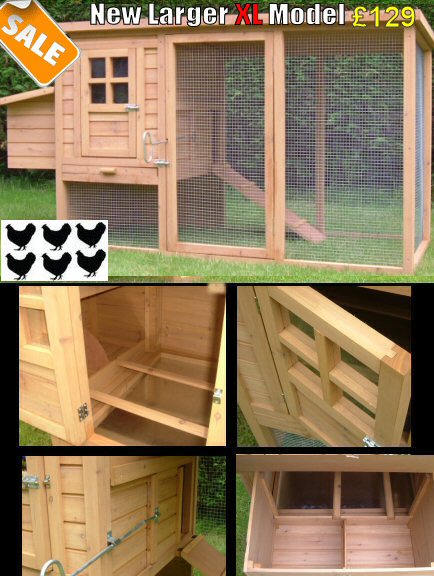
Housing. There are many, many options for the housing, from wooden traditional houses to the new trendy houses. We went for a wooden traditional house as it fitted in with our garden and I prefer to use natural materials, it's a personal choice though.
This is the house we chose for our hens. We have two of these, end to end. They are built to house 6 hens, so having 4 in each, gives them a little extra space. This house is from HenHouseWorld and we can't recommend them enough. Prompt deliver, quality products and excellent customer servic all at reasonable prices.
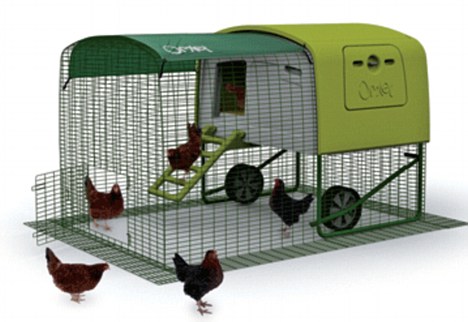
Here is the plastic equivalent for 6-10 hens. It's called an eggcube and is from Omlet. It's a little bit pricey compared to the wooden equivalent. I've not had any experience with these, so I guess it would be personal choice.
There are many different options, and your choice should reflect on your personal circumstances. We choose the wooden design shown here as it's fairly low and blends in to the garden. We don't have a large garden and it's long and narrow, so we didn't want anything that would block our view down the garden.
The one thing to bear in mind when choosing the material your house is made from is cleaning and maintenance. I would imagine the plastic houses are easier to keep clean and you could just hose them out. The wooden houses need looking after with regards to some kind of wood preservative and red mites.
An outside pen can be very useful. As mentioned, we only have a small garden, so some time in a pen can help when you need to rest the lawn or the cats! (hens like chasing cats) We have a little enclosed area outside of their run, as there are 8 of them, they need to have their own space to prevent arguments and boredom.
Here is our run, we now have a temporary roof on it at the moment, which we will be replacing before winter.
This is a homemade pen, made by my husband. It's great to leave them in when we go out for the day as it's not a great idea to leave hens loose. They get up to mischief and also you need to consider predators. (excuse the laundry.....)
The next things to think about are feeders and drinkers. Hens can be very wasteful with their feed and again, it will depend on your hens as to which feeder is right for you. Our first hens were pretty tidy and a basic feeder was sufficient. When we got our second batch of hens, they weren't so tidy. I ended up throwing a lot of wasted feed away.
This is a 12 hen feeder. We switched to this once the newer hens started wasting so much feed. They used to stand in the old one and dig the feed out allover the floor.
With this feeder, as it's raised off the floor, they can no longer do that. It's fairly heavy too, so there's no chance of it being tipped over.
The only downside is, it's quite large, so it would be no good if you only have a small run.
This was the type of feeder we started with. It sits on the floor, so the hens just stood and dug the feed out of the bottom. I tried to stand it on something, but it's not very big and heavy, so it just got knocked over. If you have polite hens, this would be fine.
The drinker is not so tricky, it needs refreshing everyday and cleaning regularly. Even if it looks clean, algae will build up, especially in the summer. Best way to check is to run your finger around the drinker, if it feels slimy, it needs a scrub. When it feels squeaky clean, it is!
A friend of mine advised me before I got my hens, that they drink a lot, and she wasn't wrong! We have two 6 litre drinkers for our hens, I always feel it's better to have too much water available than not enough.
Here is the drinker that we have. I love the legs! It raises it off the floor so that the bowl doesn't get filled with mud. My hens love to dig and flick things everywhere and the one we had to start with sat on the floor and just got filthy. This one stays pretty clean! We have this one out in the pen, and one on the floor in the run. Our run is on paving slabs, so there is nothing to flick into the inside one!
The next thing to think about is what will you feed your hens? If you decide to go for ex-battery hens, the best thing for them to start with is Ex-battery crumbs. The hens will have been fed something similar in the battery farm and probably won't eat anything else to start with. We used this for about 3 months before trying ours on the pellets (of the same brand) but, even now, our hens won't eat pellets. You can buy the feed in various size bags, but due to postage and packing, it's usually cheaper to buy it from a local supplier than from the internet.
I use a farm shop near a yard I work at, but places like Pets at Home also stock it, but they do tend to be a bit pricey. It's best to do some research before you get some hens, as availability will vary depending on where you live.
Another consideration regarding feed, will be storage. It can't get wet and you need to make sure the mice can't get to it. I chose simple plastic rubbish bins from B&Q. They weren't expensive and I've had no problem with them.
When they're empty, they're light enough to be easy to clean and when they're full, they're still light enough to be moved about (worms hide under them too, so they need moving so the girls can have a snack). Again, this will depend on how many hens you have. I buy my feed in 20kg sacks, and the bins easily take a whole sack, with room to spare.
Bedding! A difficult subject as many people will tell you what they think is best and why your choice is wrong, but to be honest, as long as it does the job and your hens are healthy and happy, then do what it right for you.
We use shredded paper from the office! I don't buy bedding. In the winter I mix a bit of straw into the paper, but that's just to keep the bed fluffy! Straw can harbor bugs and if slightly musty, can cause respiratory problems, same with hay. There are many, many options and again, do your research, try a few out and decide what's best for your hens.
Parasite control. I've mentioned red mite, they're probably the biggest challenge you'll face! A wonderful product that I use is Diatomaceous Earth. I've found Diatom to be the best value and it works wonders. You can feed it for worm control, dust the hens and housing to control red mite and lice, heck you can even use it in your garden.
We have neighbours trees down the side of our garden which are usually filled with sparrows. We've never had a major problem with red mite, but I have found a few. Since using the diatomaceous earth, I've hardly found any mite or seen any mite droppings. Fab!
The key to keeping these beasties away though, is making sure you stay on top of keeping the house clean. Hens are easy to look after if you have a solid routine. They need cleaning out, feeding and watering everyday, other than that, they tend to take care of themselves.
The other main parasites are worms and lice. We use a product called Flubenvet which is a powder you add to their feed to worm your hens. For lice, a dusting every 6 weeks of powder is all it takes! Again, I use the same stuff for the lice as for the red mites. The diatomaceous earth is natural and works by dehydrating the insects. It won't harm your hens. I try to use natural products where I can, but only if it works.
Eggs! If you have hens, you'll have some lovely eggs! But the biggest thing we had trouble with was egg boxes! Sounds crazy, but when you have hens, you don't buy eggs, so no egg boxes. So we rely on our lovely friends to give us their egg boxes, in return, we occasionally give them a full box back! Good swap I say!
You can sell your eggs with no complications and it shouldn't be too hard to find some customers. There are no eggs better than backyard hens eggs in my opinion!
Well, I can't think of anything else right now, but if I do I'll post some more. Feel free to leave a comment or send a message if you think I missed anything. Remember, all of the above is what we found to work, be useful for us. What you do with your hens should be what's best for them and what works for you. I hope this helped a bit.
I will add another post regarding tips for the garden and actual day to day care but I'll save that for another day.
Thursday, 11 August 2011
Some pictures from the garden.
Hello again,
Now, as previously mentioned, I like gardening! I thought I'd put a few pictures up of some of my favorite plants from my garden.
I love sunflowers, they're easy to grow and the hens don't seem to eat them..... These are red sunflowers, I do have one which is a lot darker than these, I'll post it at the end.
This is a miniature sunflower. The only one that survived. Sadly, the slugs got to the others. I was gutted. They seemed to come out of nowhere, and in one night, I had one seedling left.
This is one of my strawberry plants. It has pink flowers, which I thought was odd, because I've only ever seen plants with white flowers. The strawberries are longer and have bigger seeds than our other (white flowered) plant.
This is a Tomatillo plant. This is a plant native to Mexico. I thought I'd try and grow one. I had to germinate the seeds at 27 'C, which is tricky in this country!! Thanks to the un-seasonally hot spring, it grew, and grew and grew! I've yet to get any fruit from it.
My beautiful climbing rose bush. We bought this last year, so it's still a baby, but the roses are gorgeous. So long as I remember to 'dead head' the plant, it flowers all summer long.
One of my tomato plants. I have some plants outside, some in the veg patch and some grown in a cloche. They've all fruited, the cloche fruit are bigger, but none has ripened yet. I've been very good and remembered to feed and prune them, so hopefully all the fruit will ripen soon.
My potato plant. This is the first year I've grown potatoes. We've already had one crop from this plant and this is the second sprouting. I'm hoping to get another crop as the potatoes were lovely!
This is the lovely dark red sunflower. We do have some giant sunflowers too, but it started raining before I could get a photo. I'll upload one soon.
Those are just a few of our plants, we also have beetroot, chilli, courgettes, lettuce and carrots (orange and purple).
The hens make veg growing a little tricky as everything has to be fenced off or put out of reach! But as rotivators, you can't beat a hen!
Labels:
potato,
strawberries,
sunflowers,
tomatillo,
tomato,
vegetables
Subscribe to:
Posts (Atom)